How do you design for fans?
Fan-tech · Consumer Mobile · Global UX
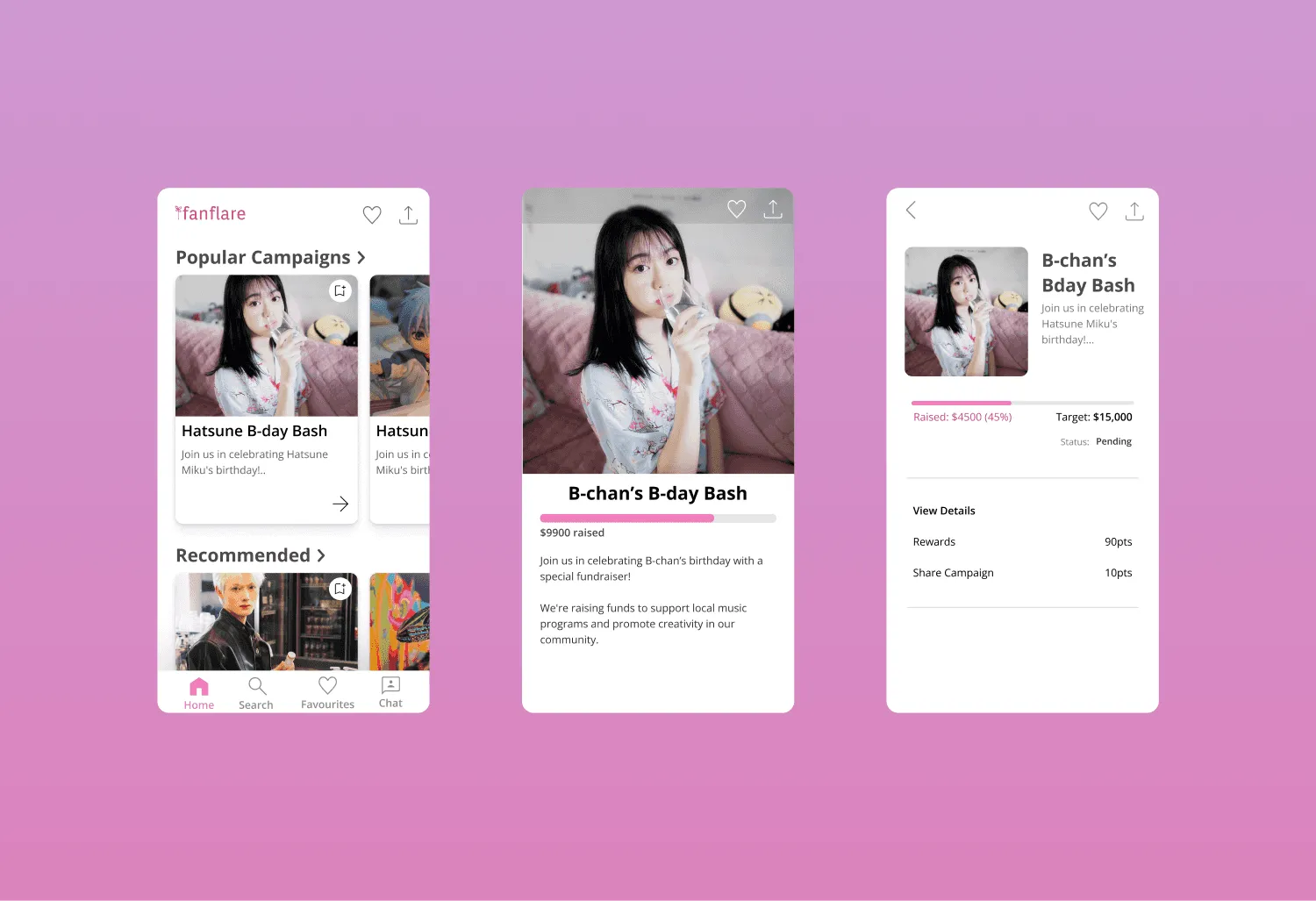
Fanflare is a mobile app that lets fans fund campaigns — billboard ads, birthday events, charity projects: for independent artists.
Timeline
November 2024 - Feburary 2025
Team
Product Designer, Design Lead, PM, Developer
Role
Product Designer · Solo end-to-end
Skills
UX Research · Design System · UI Design · Prototyping
The Problem Statement
Fan communities are deeply engaged but chronically underserved by existing platforms. Weverse handles social. Patreon handles funding. Ko-fi handles tipping. Nothing handles all three in a way that feels built for the culture rather than retrofitted onto it.
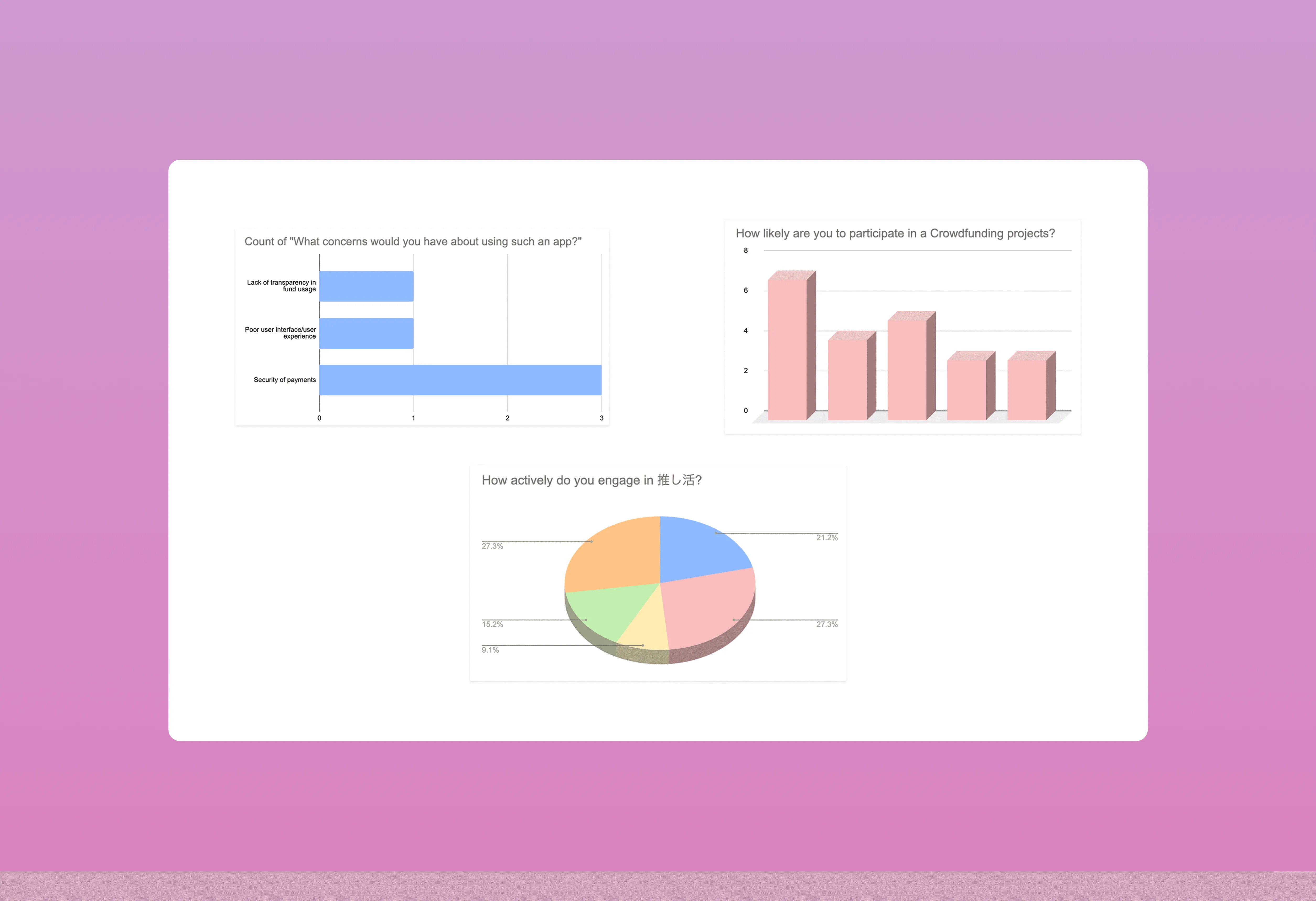
I ran surveys and interviews with 12 fans across K-pop, VTuber, and cosplay communities. The data was unambiguous.
92% rated transparent donation tracking as 'very important.' 75% struggled to find and join campaigns. These aren't preference scores — they're trust failures.
The existing platforms weren't just inconvenient. They were breaking the relationship between fans and the artists they were trying to support. Money was going in with no clear feedback on where it was going or what it was doing. For a community built on emotional investment, that's a fatal flaw.
Who I was Designing For
Three distinct user types emerged from the research, each with different motivations and friction points.
The dedicated superfan — highly active, financially committed, wants status and visibility for their contributions.
The casual supporter — participates occasionally, needs low-friction entry and clear impact.
The community organiser — coordinates campaigns across multiple platforms, needs tools that reduce admin overhead.
The global dimension shaped every decision. A K-pop fan in Seoul and a VTuber fan in Jakarta are using the same app with different cultural expectations around hierarchy, gifting etiquette, and community recognition. Designing for that without creating separate experiences was the constraint that made this interesting.
The UX Design Workflow
Competitive analysis first. Eight apps across three categories: fan community platforms, event tracking tools, and creator support apps. I wasn't looking for features to copy. I was mapping the white space: what none of them did well, where trust broke down, where community behaviour was being ignored by the interface.
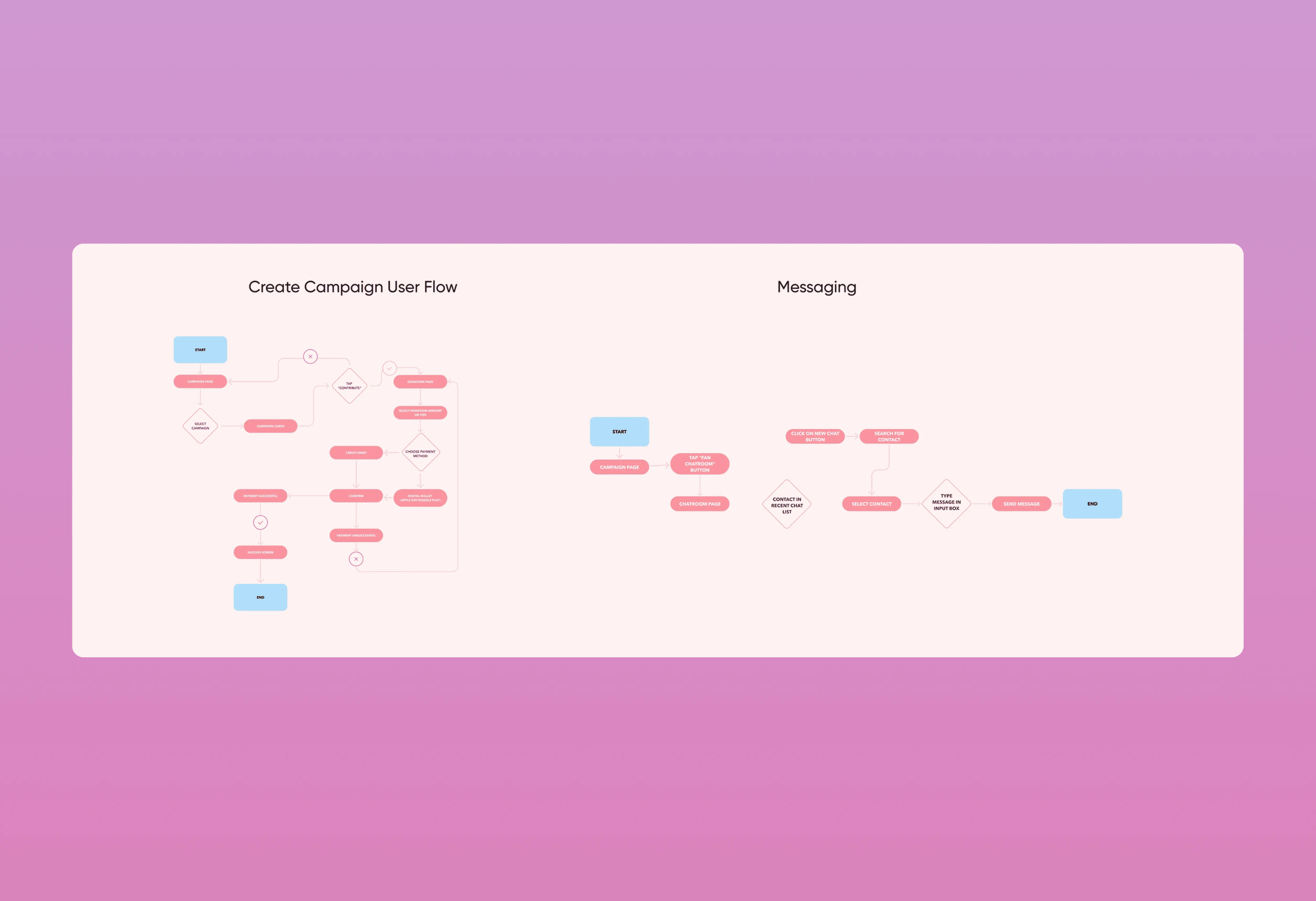
User flows mapped before any screen was touched. The donation flow, the campaign discovery flow, the contribution confirmation — each one stress-tested for the moment a user's trust is highest at risk. That's when they've committed money and are waiting to feel like it mattered.
Low to mid to high fidelity, each stage gated by a specific question. Low-fi answered: does the hierarchy make sense? Mid-fi answered: do the interactions hold up? High-fi answered: does this feel like it belongs to this community?
The final 40% on this project was cultural fluency — making the app feel native to fandom, not just functional for it.
Building the Design System
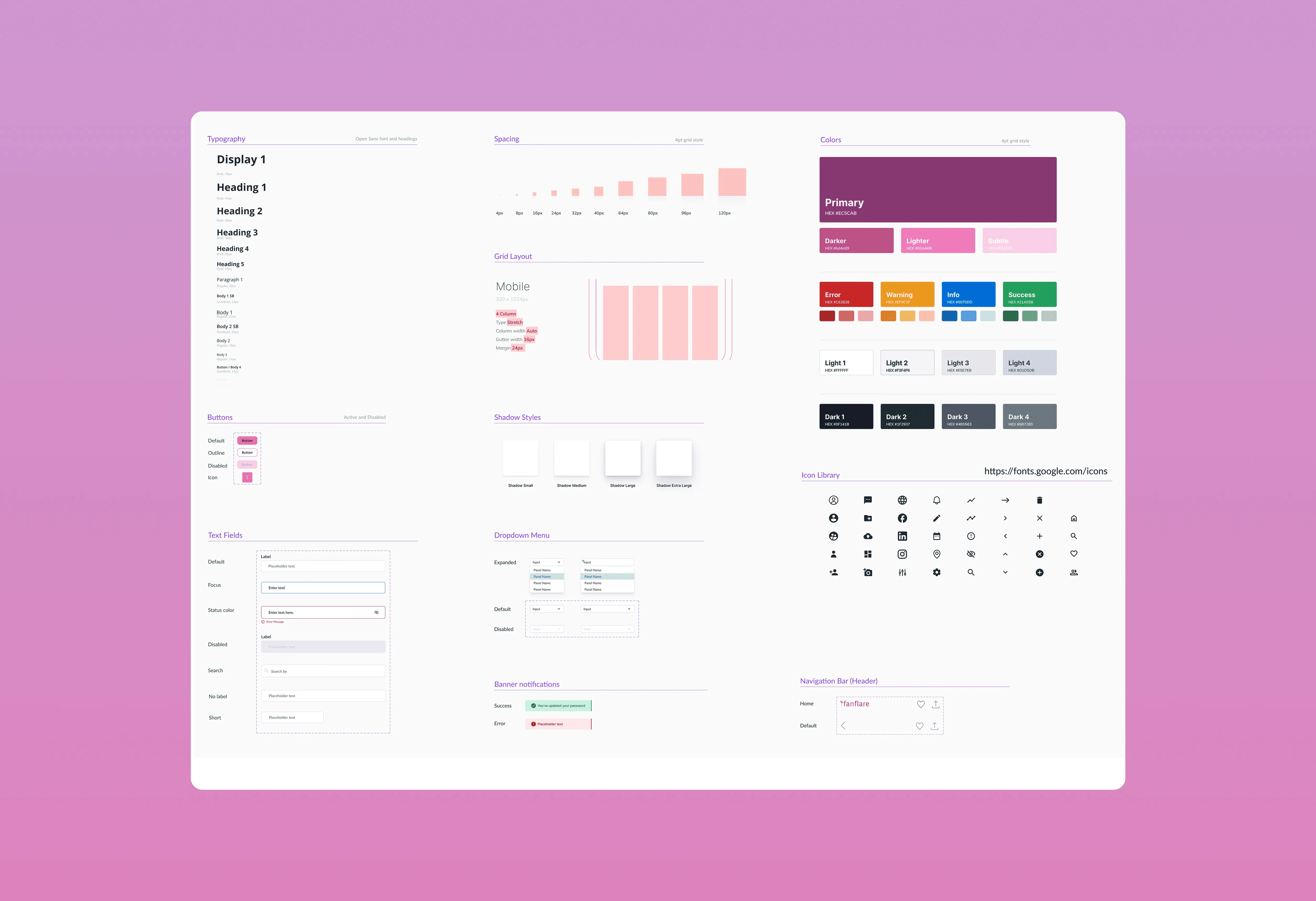
Fan culture has a visual language. Rounded forms. Soft energy. Colour that reads as warmth and celebration, not corporate. I built the design system around that — not as an aesthetic choice but as a strategic one. A design system that clashes with the emotional register of its users creates friction before a single tap happens.
Typography pairs chosen for hierarchy and cultural legibility across Latin and CJK scripts. Colour palette built for accessibility first, brand personality second — because an app used across multiple languages and screen conditions can't sacrifice readability for mood. Component library structured for reuse across the campaign, community, and profile surfaces, with consistent spacing that creates calm inside what could easily become a visually chaotic feed.
Every component documented. Every decision defensible. The system wasn't built for this version of the app — it was built to scale into the next three.
The Interactions that Mattered Most
The donation confirmation screen. This is the highest-trust moment in the entire app — a user has just committed money to an artist they care about. The screen had to do three things simultaneously: confirm the transaction, show immediate impact ('You're now #12 on the campaign leaderboard'), and make sharing frictionless. I tested four versions before landing on one that consistently produced the right emotional response in user testing.
Campaign discovery. 75% of surveyed fans said they struggled to find campaigns. The solution wasn't more filters — it was better defaults. Campaigns surfaced by community proximity first, active momentum second. A fan who follows VTubers shouldn't have to search to find VTuber campaigns. The app should already know.
The contribution leaderboard. 83% of users wanted rankings and badges for contributions. But public leaderboards in fan communities carry social risk — nobody wants to be visibly less committed than the person above them. I designed opt-in visibility, where users control whether their position is public, semi-public, or private. Engagement went up when the pressure came down.