Redesigning the Company Website
Transforming website clarity into measurable business impact.
I led the full UX redesign of Virtusize.com end-to-end: research, IA, UI, style guide, and frontend implementation. Worked directly with the CEO, Growth, and Marketing to turn a confusing product page into a lead-generation machine.
Timeline
Feburary 2025 - November 2025
Team
CEO, Growth, Marketing
Role
UX/UI Designer & Project Manager
Skills
UX Research · Information Architecture · UI Design · Branding · Frontend Development
The Problem
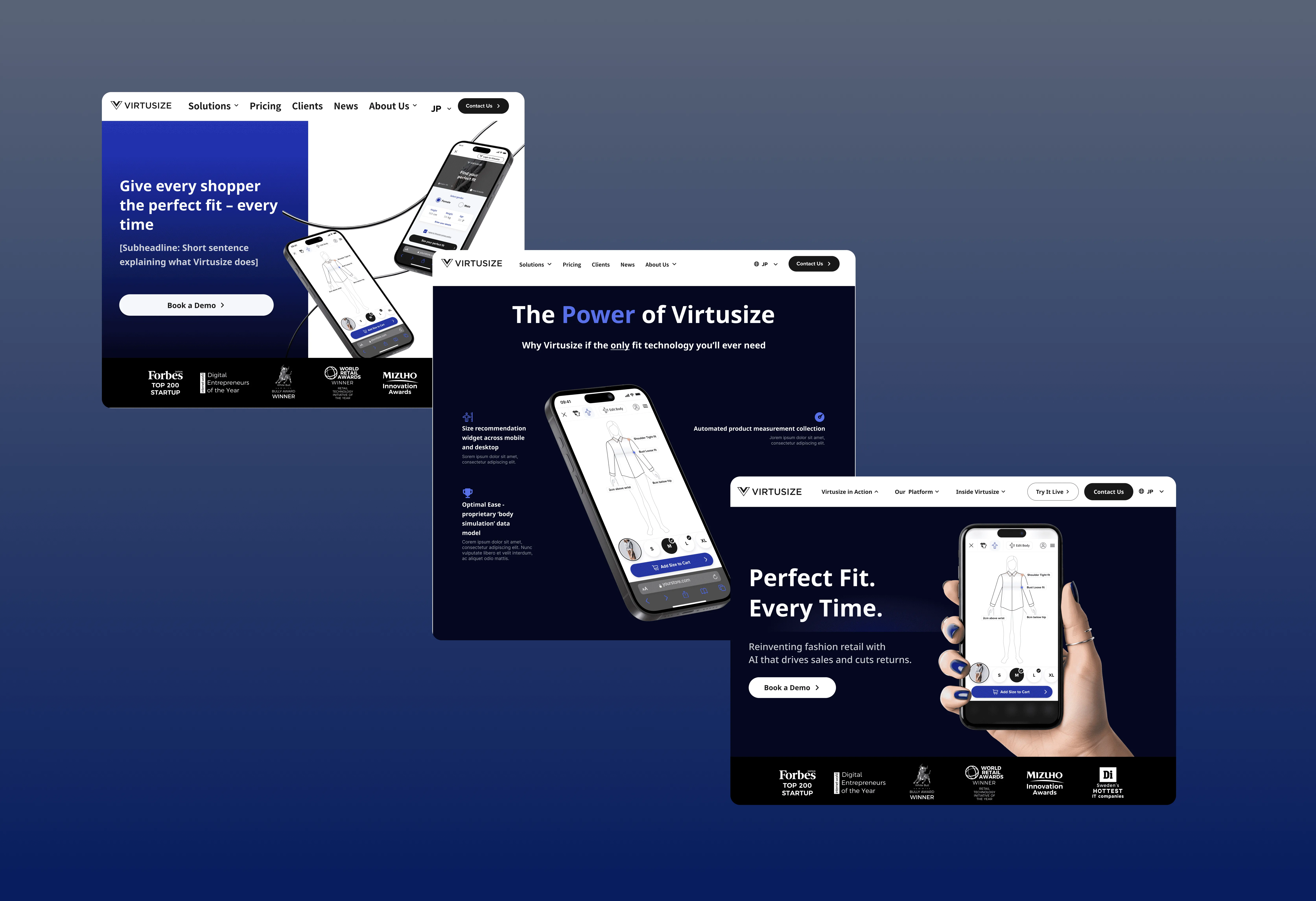
Virtusize had a genuinely good product. But the website wasn't doing its job. Potential clients were landing on it, not understanding what they were looking at, and leaving. The sales team was stuck in outbound mode because inbound wasn't generating anything worth having.
I started where I always start: with the people closest to the pain. Interviews with the Growth and Marketing teams surfaced something I didn't expect: client emails were a goldmine of feedback. People weren't ghosting us silently. They were writing in, confused, asking basic questions the website should have already answered.
The product wasn't the problem. The story we were telling about it was.
Three things were broken: the value proposition was buried, the information architecture had no clear path to conversion, and the site wasn't showing up for the searches that mattered. We weren't just losing leads. We were invisible.
Who I Was Working With
This wasn't a solo redesign. I worked directly with the CEO on design direction and business priorities, embedded with the Growth team to understand the sales funnel gaps, and collaborated with Marketing on SEO strategy and content restructuring. Every major decision went through stakeholder reviews, which meant I had to design things I could explain as well as show.
That's a different kind of design challenge. You're not just solving for the user. You're solving for the room.
The Process
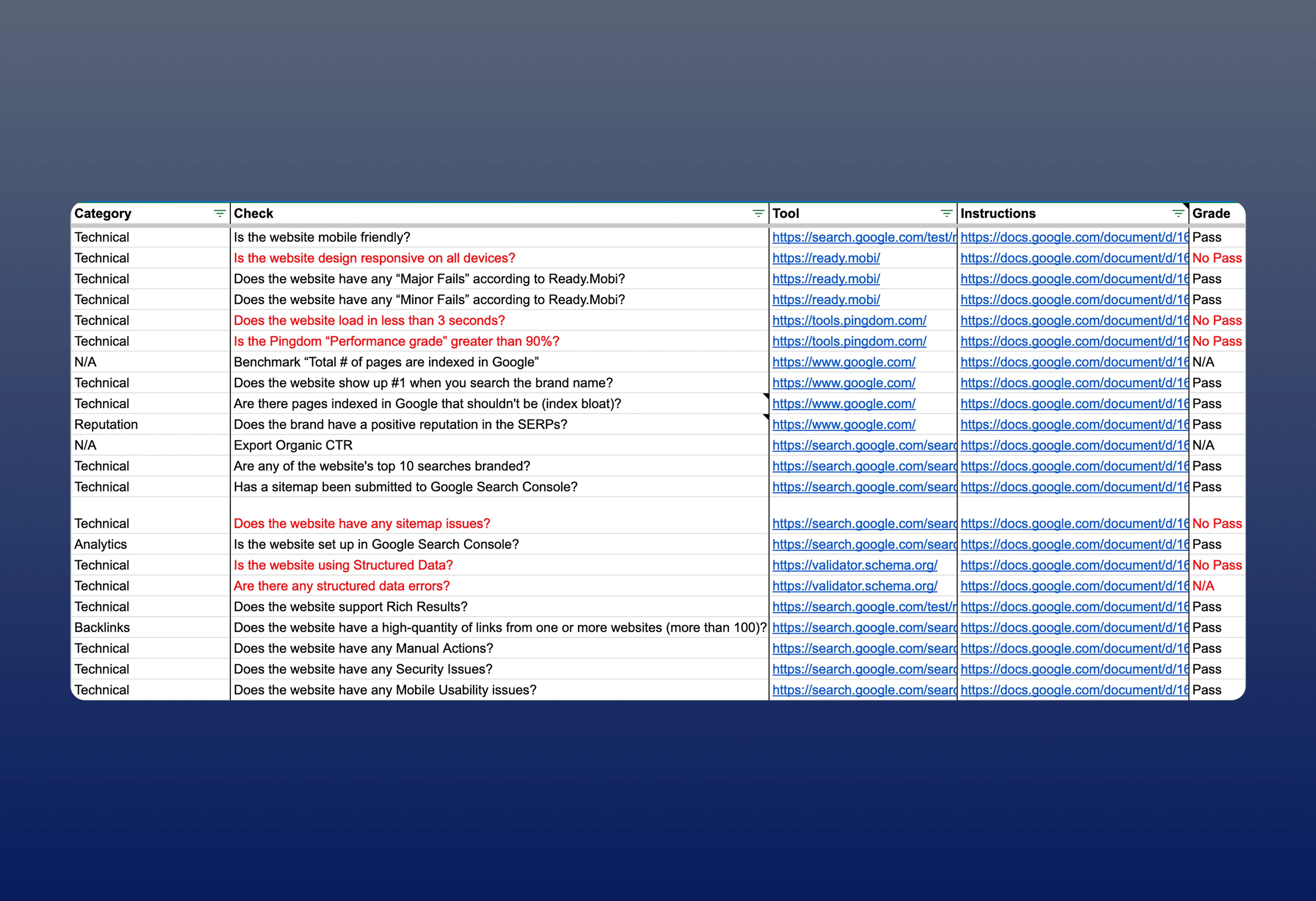
Before touching a single frame, I spent time in the data and the competitive landscape. I analyzed how top SaaS and e-commerce companies structured their landing pages: how they sequenced information to build trust and move visitors toward a demo. I dug into SEO: which keywords we should own, where we were losing ground, why competitors were outranking us on searches we had every right to win.
The research pointed to one core issue: the website was organized around how we thought about the product, not how a potential client tries to understand it. The fix wasn't cosmetic. It was structural.
I rebuilt the information architecture from scratch: redefining top-level navigation, grouping product pages by user need rather than feature category, and creating clear paths to the two things that actually drove revenue: booking a demo and submitting an inquiry.
Redesigning the sitemap is unglamorous work. It's also where most of the impact came from.
What I Built
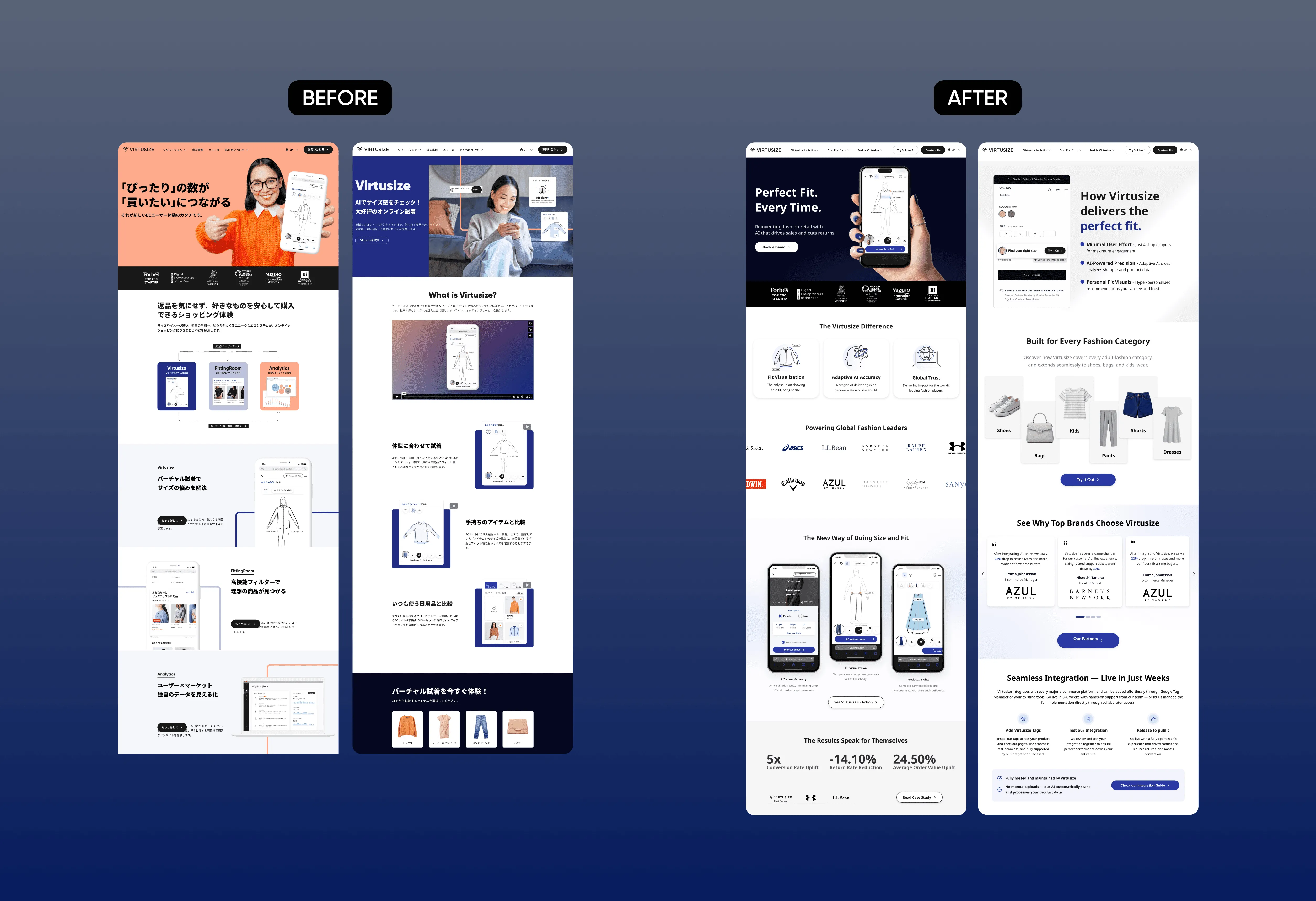
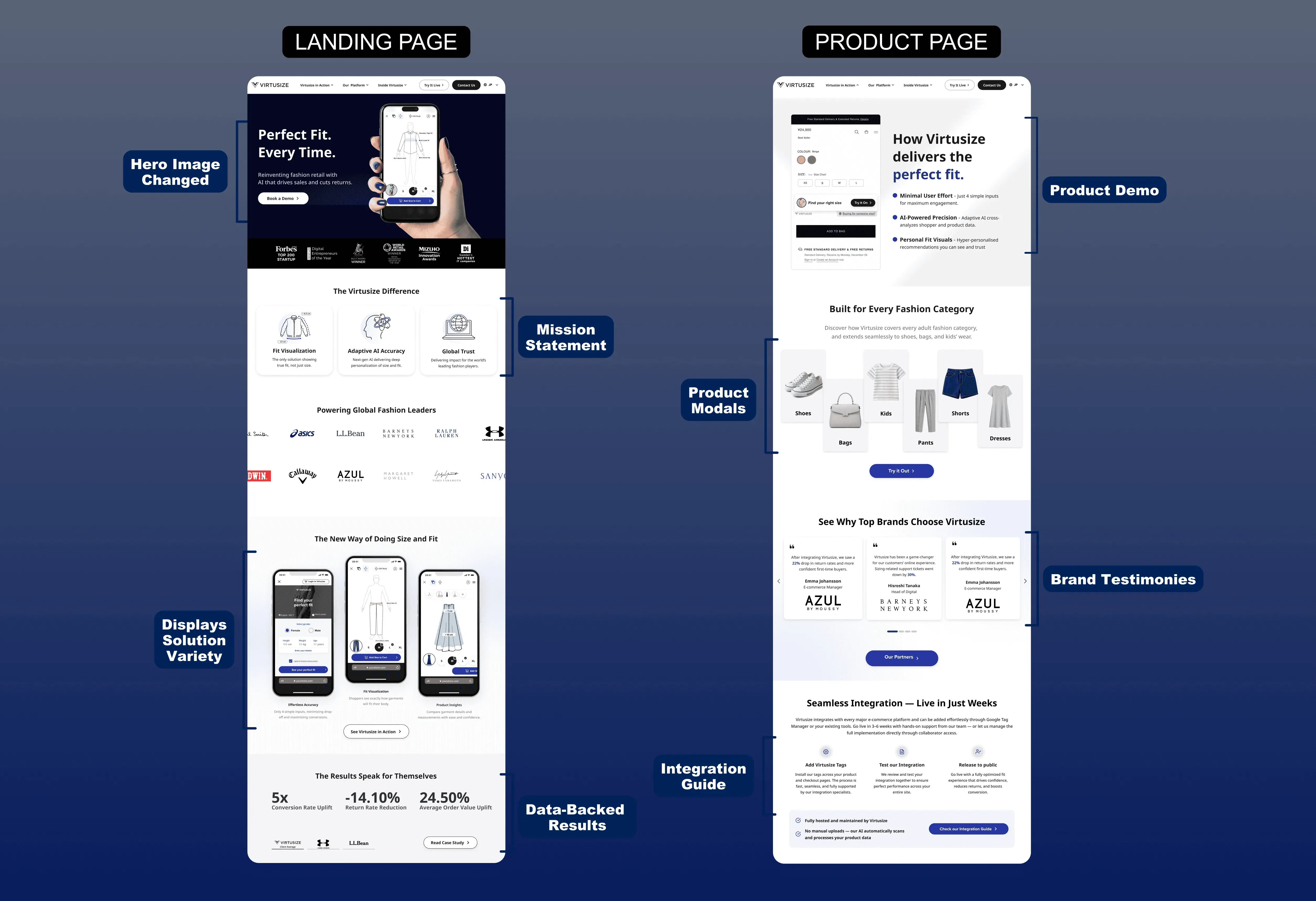
The redesigned landing page led with a clear mission statement and a human hero image: moving away from abstract product visuals toward something that communicated trust in the first three seconds. I added a data-backed credibility section above the fold, because B2B buyers don't convert on aesthetics. They convert on confidence.
On the product pages, I introduced a demo video, simplified modal flows, and built an integration guide visual that answered the question the Growth team kept hearing: 'How hard is it to plug in?' We answered that before they had to ask.
I also created a full refreshed style guide: updated typography hierarchy, an accessible color palette, and a reusable component library: so future updates wouldn't drift back into inconsistency.
And I helped implemented it with the developer: long hours, Visual QA fixes and adjustment but we pushed through. HTML, CSS, JavaScript. Webflow.
What This Case Study is Really About
It's about what happens when design gets treated as a business function, not a finishing step. The Growth team wasn't asking for a prettier website. They were asking for a website that sells. Those are different briefs, and knowing the difference is the whole job.
I learned that stakeholder alignment isn't a soft skill — it's a design constraint. Every decision had to survive a room full of people with different definitions of success. Learning to design for that, and present for that, made me a significantly better designer than when the project started.
The most useful thing I built wasn't a component or a page. It was shared clarity on what the website was actually for.